Supporting phonological awareness, language, and reading skills through fun, individualized therapy.
Early literacy skills are the building blocks children need for learning to read, write, and communicate successfully. These skills begin developing long before a child is formally taught to read and include abilities such as recognizing sounds in words, understanding letters and print, learning vocabulary, and developing strong listening and language skills.
Children with speech and language difficulties are often at greater risk for challenges with reading and spelling. Early support can help build a strong foundation for literacy and support success at home and at school.
Early literacy includes a variety of important pre-reading and reading-related skills, such as:
A child may benefit from support if they:
• Have difficulty rhyming or identifying sounds in words.
• Struggle to learn letter names or letter sounds.
• Have delayed speech or language development.
• Show difficulty following stories or retelling events.
• Avoid books, drawing, or early writing activities.
• Have trouble blending sounds together to read simple words.
• Experience frustration with reading or spelling tasks.
• Have a family history of reading or learning difficulties.
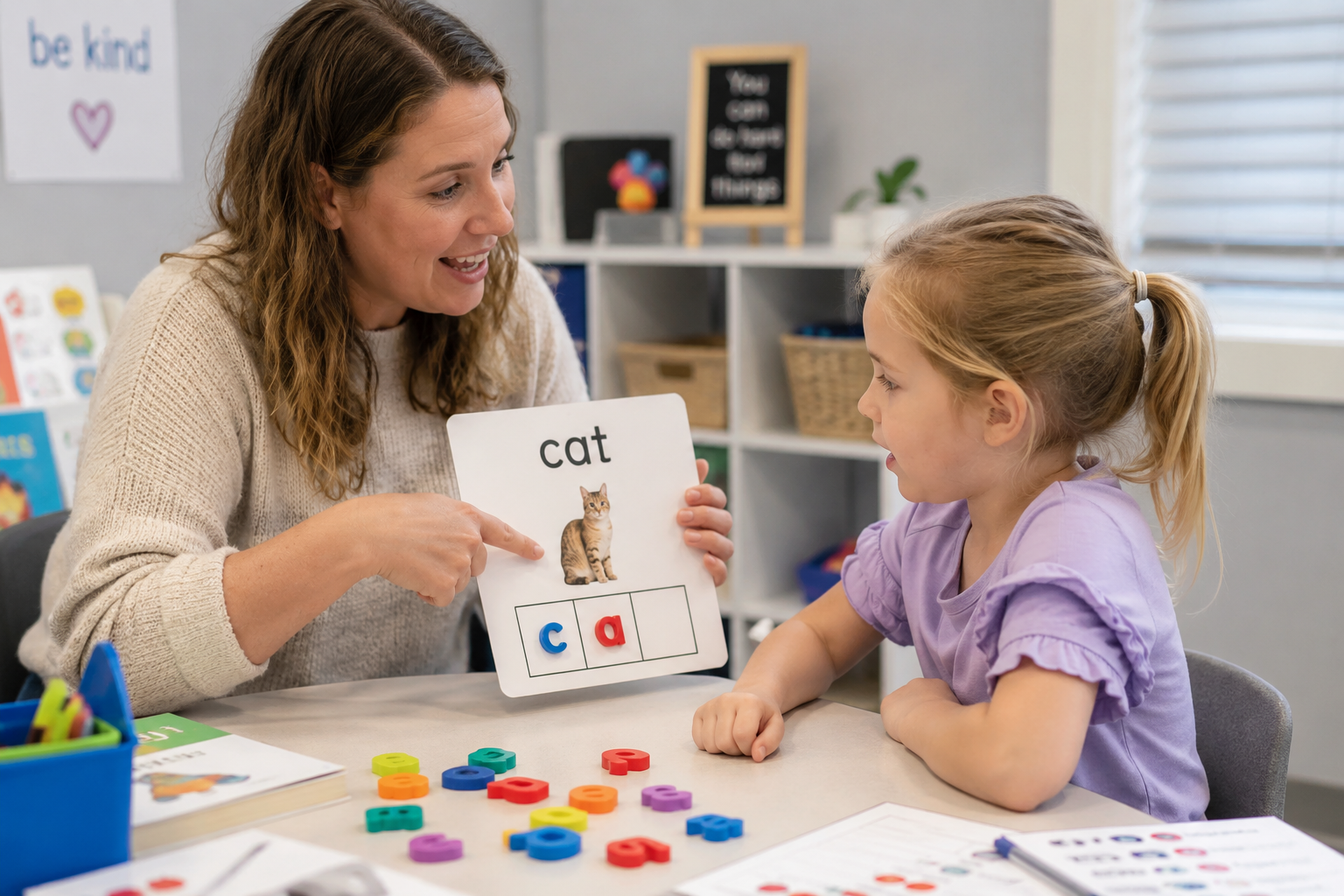
Our therapy approach focuses on building strong foundational literacy skills in a fun, engaging, and individualized way. We tailor therapy to your child’s strengths, learning style, and developmental level while helping them gain confidence and success with early reading and language skills.
We may use:
• Play-based activities to develop sound awareness and listening skills.
• Rhyming, syllable, and sound games to strengthen phonological awareness.
• Letter-sound activities to support early reading development.
• Storybooks and storytelling activities to build vocabulary and comprehension.
• Multi-sensory learning techniques to support engagement and retention.
• Structured literacy strategies to target decoding, spelling, and reading readiness.
• Visual supports and hands-on activities to make learning interactive and enjoyable.
Our goal is to provide effective strategies to help your child speak more fluently and feel more confident.


Helping children pronounce sounds clearly and develop patterns for effective speech.

Improving coordination for speaking through specialized techniques for conditions like apraxia and dysarthria.

Supporting understanding, vocabulary growth, and sentence structure for clear communication.

.webp)
Psychologist centers are staffed by licensed psychologists and mental health professionals. These professionals may include clinical psychologists, counseling psychologists, psychotherapists, psychiatrists, and other specialists.
Examining the dynamics of interpersonal relationships, effective communication, and conflict resolution.